Flooding in Kennedy Heights: Resources, Recovery Steps, and Cleanup Safety
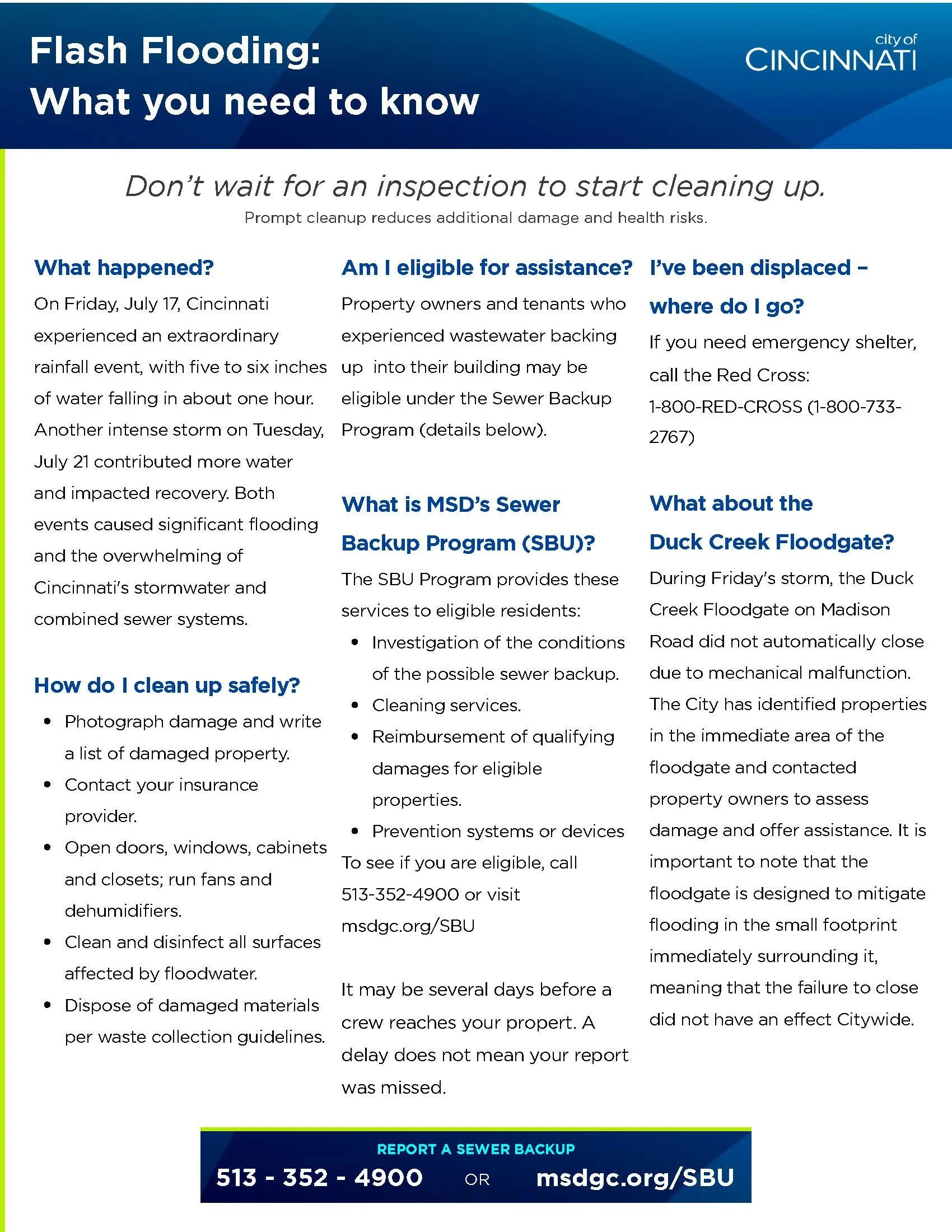
If your home, basement, or street took on water from the recent storms, you are not alone. Heavy rain hit Cincinnati hard on July 17, with some spots in our area getting five to six inches in just a few hours, and more storms rolled through again on July 21. A lot of Kennedy Heights neighbors are dealing with wet basements, damaged belongings, and a lot of questions about what to do next.
Here is a rundown of the help that is available, the steps to take if your home flooded, and how to clean up safely.
Resources Available Right Now:
Report a sewer backup to MSD. If water or sewage backed up into your home through a drain, toilet, or floor drain, this is different from surface water coming in from outside, and Metropolitan Sewer District has a program for it. Call 513-352-4900 or visit msdgc.org/SBU to report it and learn about eligibility for cleaning services and reimbursement of qualifying damages. It may take a few days for a crew to reach your property. A delay does not mean your report was missed.
MSD's cleanup guide. MSD publishes a customer guide with recommendations for safely cleaning and disinfecting flood-damaged property. You can find it here: Customer Guide to Sewer Backups (PDF)
Need help cleaning up? Call 2-1-1. Hamilton County is connecting flood-affected residents with local volunteer organizations that can help with debris removal and cleanup labor.
Need shelter or a cleanup kit? Call the Red Cross at 1-800-733-2767 (1-800-RED-CROSS). They can help with emergency shelter and also have flood cleanup kits available.
Public dumpsters. The City has placed public dumpsters at Hyde Park Square, 5008 Whetsel Ave, 6214 Kincaid Ave, 3807 Brotherton Rd, and 4420 Camberwell Rd for flood debris disposal.
Fallen power line? Call 311 or report it at 311cincy.org. Duke Energy also has safety guidance on staying clear of downed lines: duke-energy.com/safety-and-preparedness/storm-safety/safety-around-power-lines
Sign up for weather alerts. Both the county and the city have free alert systems. Alert HC sends storm and flood warnings straight to your phone or email at alerthc.org, and the City's CincyAlert does the same at cincyalert.com
Disposing of Flood Debris:
Household chemicals: use the Hamilton County ReSource search tool to find out how to dispose of them properly: hamiltoncountyresource.org/recycling_guide/recycling_and_reuse_search_tool.php
Drywall and other construction debris: drop off at one of the four construction and demolition landfill sites listed here: hamiltoncountyresource.org/business_detail_T4_R31.php
General questions about flood debris and curbside pickup: call the Hamilton County Recycling Hotline at 513-946-7766, or check Rumpke's guidelines: rumpke.com/residential/waste-removal/curbside-guidelines
Flooded lithium-ion batteries or electric vehicles: unplug them from any charger right away and call your local fire department. Do not wait on this one.
Full county flood recovery page. Hamilton County's Emergency Management Agency is keeping one page updated with all current flood resources and situation reports: hamiltoncountyohio.gov/government/departments/emergency_management/july2026flooding.php
If Your Home Flooded, Here Is What To Do:
Get yourself and your family somewhere safe and dry first. If water is still rising, move to higher ground and get valuables and important documents off the floor. Never walk or drive through flood water. It is almost always deeper and faster moving than it looks.
Call MSD if it is a sewer backup. If the water came up through a drain or toilet rather than in from outside, report it to MSD's Sewer Backup Program at 513-352-4900 or msdgc.org/SBU. This starts their process for investigating and potentially reimbursing certain cleanup costs.
Stay away from any downed power lines. If you see one, do not go near it or anything it is touching. Call 311 to report it.
Call your insurance company and be specific about what happened. Tell them plainly whether this was a sewer or drain backup, a sump pump failure, or water coming in from outside. These are treated as different types of claims, and using the right words matters. If your basement flooded because water backed up through a drain or your sump pump could not keep up, that is typically a water backup claim, which requires its own endorsement on a homeowners policy and is separate from flood insurance. Ask your agent directly what your policy covers so you know what to expect before the adjuster shows up.
Document everything before you touch anything. Take photos and video of the damage, the water line, and anything that got ruined. Make a list of damaged items as you go. Do not throw things away until your adjuster has seen them or told you it is okay to toss them.
Watch out for cleanup scams. If you need a contractor for serious repair work, ask your insurance company for a list of vetted names, or check a business through the Better Business Bureau at bbb.org/us/oh before you hire anyone.
Start drying things out. Open windows, doors, cabinets, and closets, and run fans or a dehumidifier if you have one. The faster you can dry a space, the less mold you will deal with later.
Five Safety Precautions For Cleanup:
Wear protective gear. Rubber gloves, long pants, long sleeves, and closed-toe shoes with a sturdy sole. Flood water, especially anything connected to a sewer backup, can carry bacteria and contaminants you do not want on bare skin.
Wash your hands often. Any time you are working in a contaminated area or handling items that got wet, wash up before you eat, drink, or touch your face.
Keep kids and pets out of flooded areas. Flood water and sewage backup are not safe for little ones to play in, even after the water looks like it has gone down.
Throw out food that touched flood water. This includes anything in a refrigerator or freezer that lost power and thawed, and any milk, cheese, or canned goods that are bulging or leaking. When in doubt, throw it out.
Ventilate as you work. Open windows and run fans while you clean to keep air moving. This helps with drying and also keeps you from breathing in mold spores or fumes from cleaning products in a closed-up space.
We know this kind of week is exhausting, on top of everything else life throws at you. If you are a Kennedy Heights neighbor dealing with flood damage and need a hand figuring out next steps, reach out to the Kennedy Heights Development Corporation. We are here, and we are in this with you.